Standard Poodles shed very little. That part of the reputation is earned, and it is genuinely one of the best reasons to choose the breed.
But “barely sheds” gets heard as “low maintenance,” and those two things are close to opposites in a poodle. The hair that a Labrador leaves on your sofa is hair a poodle keeps. It has to go somewhere, and where it goes is into the coat, where it forms mats unless you take it out yourself.
You are not avoiding the work. You are trading vacuuming for brushing.
What Actually Happens to the Hair
All dogs lose hair. Individual hairs reach the end of their growth cycle and die, in poodles exactly as in every other breed. The difference is entirely in what happens next.
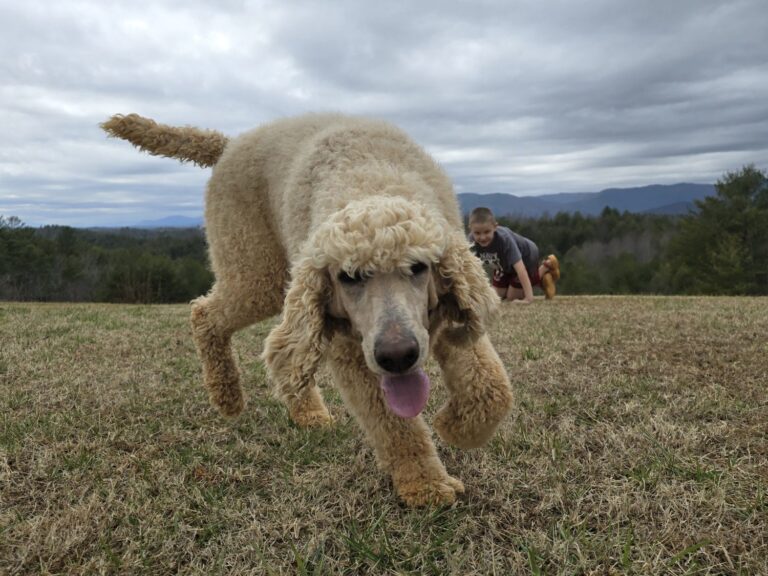
Most breeds have a straight coat with a defined growth cycle – hairs grow to a set length, die, and fall out, which is why you find them on the floor. The Poodle coat is curly and grows continuously, more like human hair than typical dog hair. When a poodle hair dies, the curl catches it and it stays put, tangled among the living hairs around it.
So the shed hair is still on your dog. Brushing removes it. If you do not remove it, it packs down against the skin and becomes a mat.
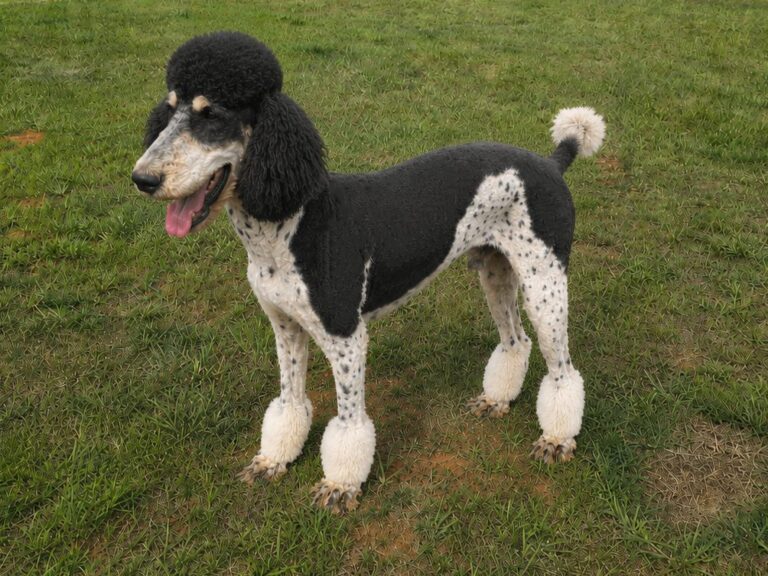
This is also why poodles need clipping at all. The coat does not stop at a natural length, so left alone it simply keeps growing. Most Standard Poodles need a full groom every six to eight weeks for their entire lives – and that is a genuine ongoing cost as well as a time commitment, typically $80 to $120 a session at North Carolina rates, more in big cities, depending on the clip you choose. Our grooming guide covers the routine in detail, and poodle clips shows the common styles.
Shedding Versus Allergies
These get conflated constantly, and they are separate questions.
Shedding is about hair on your furniture. Allergies are about dander – the flakes of dead skin that carry the proteins people actually react to – and saliva. A low-shedding coat traps dander as well as hair, which is why poodles suit many allergy sufferers, but the mechanism is different and the outcome is not guaranteed.
If someone in your household has a real allergy, that deserves its own reading rather than an assumption. We covered it properly in are Standard Poodles hypoallergenic.
The Coat Change, Which Nobody Warns You About
This is the part we most want families to know in advance, because it catches people out and it is the point at which some owners quietly give up on brushing.
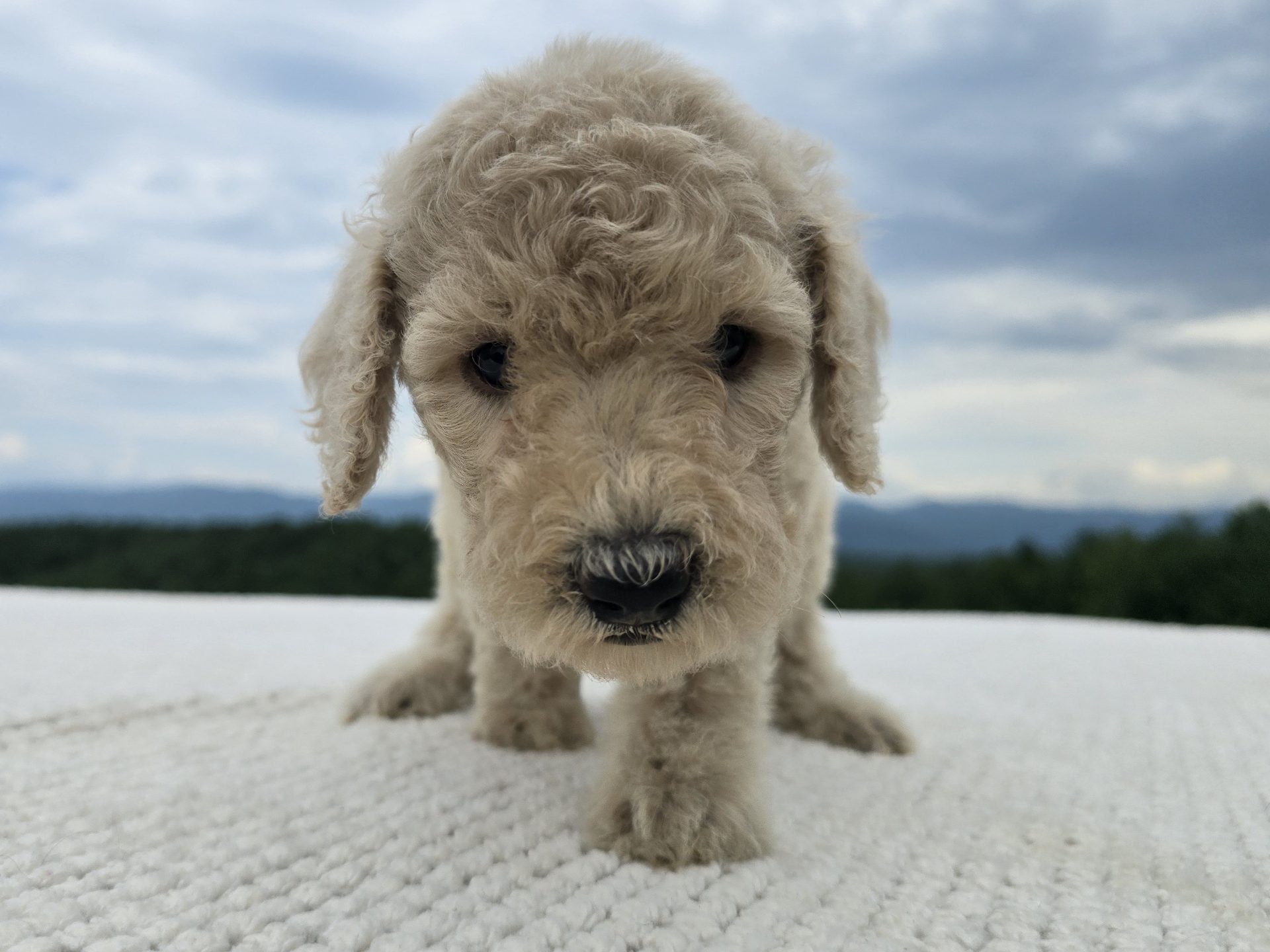
Somewhere between about nine and twelve months, your poodle swaps its soft puppy coat for the denser, coarser adult coat. It does not happen tidily. For roughly two to four months the two coat types exist at the same time, tangled through each other, and the dog mats faster than you would believe possible.
A puppy you have been brushing twice a week without difficulty will start producing mats overnight. Behind the ears, in the armpits, at the base of the tail, along the collar line. Miss three days and you can find a mat the size of a golf ball welded to the skin.
During coat change you need to brush thoroughly every day, or close to it. Not a quick pass over the top – a proper line brush, working in sections from the skin outward, so that the bristles reach all the way down rather than skating across the surface. A coat can look immaculate on top and be solidly matted underneath, and that is exactly how dogs end up shaved to the skin at the groomer.
It ends. Once the adult coat is fully in, most dogs settle to a manageable few sessions a week. But the adolescent months are the hardest the coat will ever be, and knowing that ahead of time is the difference between pushing through it and giving up.
What You Actually Need
As an Amazon Associate, and through other affiliate partnerships, Poodles of Piedmont earns from qualifying purchases made through the links below – at no extra cost to you. These are the tools we use ourselves.
Three things do most of the work:
- A good slicker brush. The Chris Christensen Big G is what we use. It is not cheap and it is worth every dollar – the pins are long enough to reach the skin on a Standard Poodle, which most supermarket brushes are not. A cheap slicker skims the top of the coat and gives you false confidence.
- A steel comb. This is the honesty check. After brushing a section, run the comb through it from the skin out. If the comb passes freely, that section is genuinely clear. If it snags, you have not finished, whatever the brush told you. A brush and comb set covers both.
- A dematting comb for when you lose a battle, which you will. A dematting comb splits a mat so it can be worked apart rather than cut out.
One firm rule: never bathe a matted dog. Water tightens a mat and sets it like concrete. Brush out completely first, then bathe. Doing it the other way round is how a manageable tangle turns into a shave-down.
Everything we use is listed on our recommended products page.
When a Poodle Really Does Shed
Noticeable hair loss in an adult poodle is not normal and is worth a vet visit rather than a shrug. Possible causes include thyroid problems, sebaceous adenitis (a skin condition Standard Poodles are somewhat prone to, in which the glands that oil the coat are destroyed), allergies, parasites, and stress.
Bitches also drop coat after a heat cycle or a litter, which is hormonal and resolves on its own.
The rule of thumb: a poodle that suddenly starts leaving hair around the house has something going on. It is a change in a dog whose baseline is almost no shedding at all, and changes in baseline are what you pay attention to.
Is It Worth It?
For most families, yes – but go in with clear eyes.
You get a house without dog hair on every surface, a coat that suits many allergy sufferers, and no seasonal blowout twice a year. In exchange you commit to several brushing sessions a week for the next twelve to fifteen years, a professional groom every six to eight weeks, and a few genuinely difficult months when your dog is around a year old.
The families who struggle with poodles are almost always the ones who were told “they don’t shed” and reasonably concluded that meant less work. The families who love them knew what they were signing up for.
We would rather you knew now. If you want the fuller picture on the breed, our poodle information section covers temperament and care, and are Standard Poodles good family dogs gives the same treatment to temperament.
Questions about the coat, or about anything else? Call us in Morganton at 828-870-3989, or start with the adoption application when you are ready.
Ready to Find Your Perfect Standard Poodle?
Family-raised in Morganton, NC. Health-tested parents, a five-year guarantee, and AKC registration on every puppy.