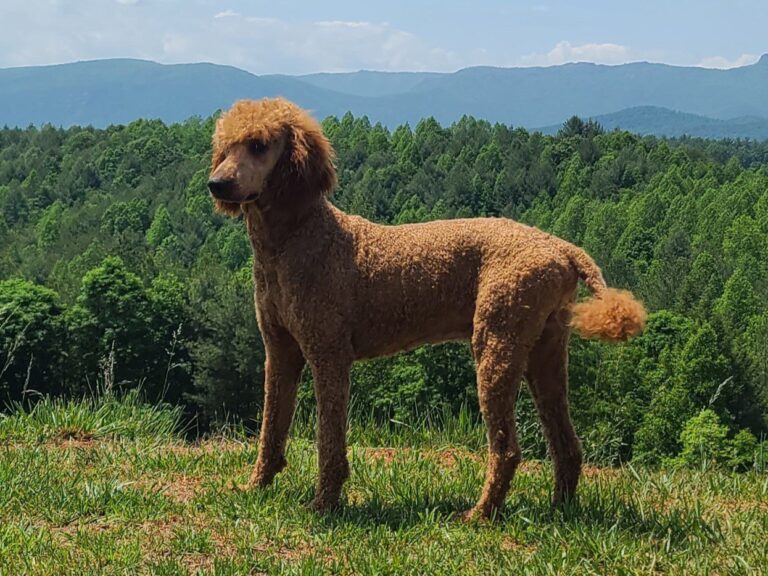
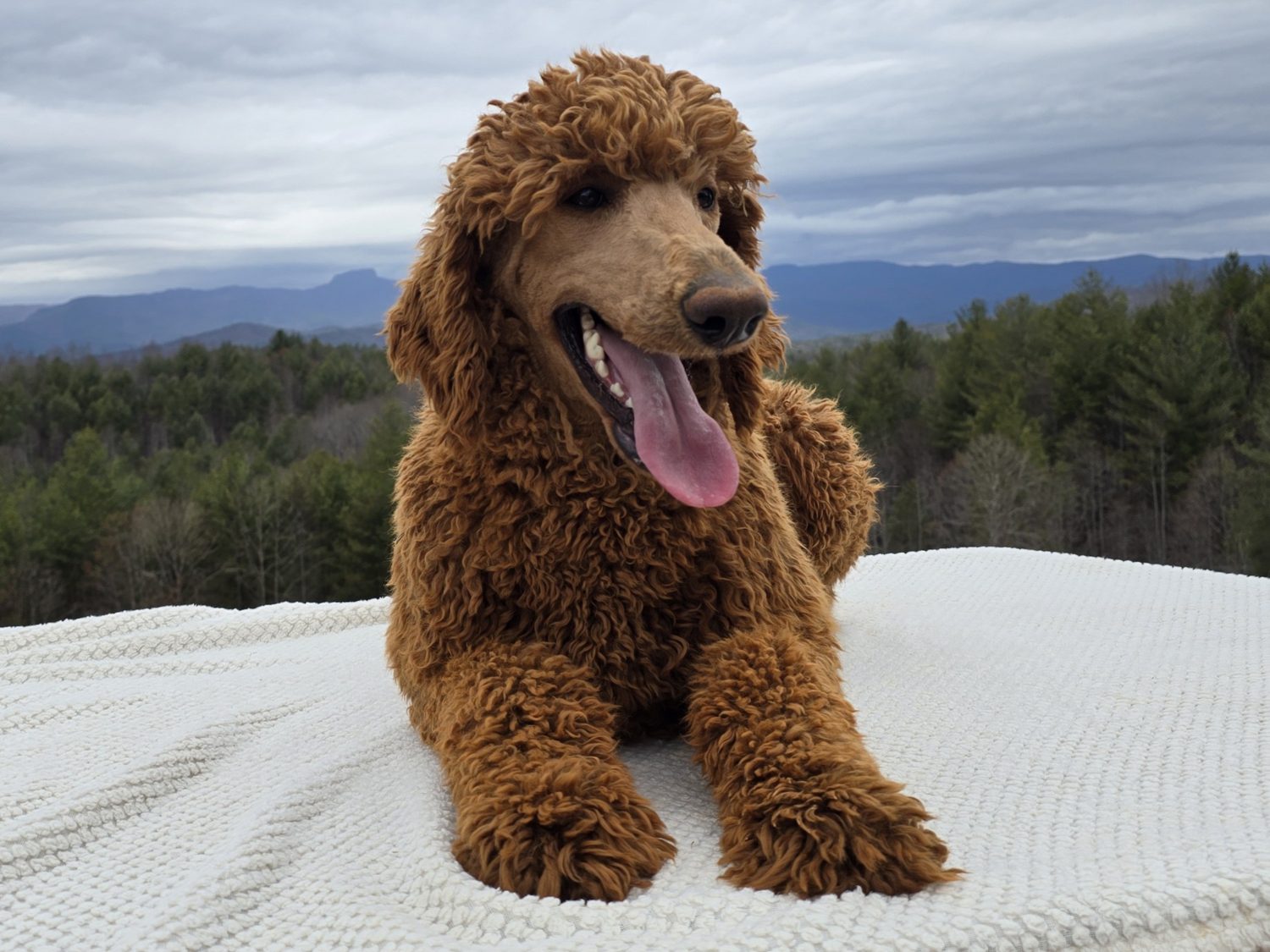
Most Standard Poodles live somewhere between 12 and 15 years. Plenty reach 16. A few make it past that.
For a dog this size, that is genuinely good. Large breeds tend to be short-lived, and the general rule is that the bigger the dog, the fewer the years – a Great Dane is doing well to see nine. The Standard Poodle sits at 40 to 70 pounds and routinely outlives dogs half its weight. It is one of the quiet arguments for the breed that nobody puts on a poster.
But an average is just an average, and the gap between a poodle who dies at ten and one who is still stealing socks at fifteen is not mostly luck. A good deal of it comes down to decisions – some made by the breeder before your puppy was born, most made by you over the following decade.
Where the Years Actually Go
When a Standard Poodle’s life is cut short, it is usually one of a handful of things.
Bloat is the one that frightens us most, because it can take a completely healthy dog in a matter of hours. Standard Poodles are deep-chested, which is the body shape that predisposes a dog to gastric dilatation-volvulus – the stomach fills with gas and then twists. It is a surgical emergency and it is fatal without fast treatment. Every Standard Poodle owner should be able to recognize it, which is why we wrote a separate piece on the warning signs of bloat. If you read one other thing today, read that one.
Cancer is the leading cause of death in most large breeds past middle age, and Standard Poodles are not exempt. Some of it is genetic, some of it is simply what happens to cells over time. Early detection is what you have control over. A lump that gets checked at three weeks has a very different prognosis from the same lump at six months.
Addison’s disease appears more often in Standard Poodles than in most breeds. The good news, and it is genuinely good news, is that a diagnosed and medicated Addison’s dog usually lives a full normal lifespan. The danger is entirely in the missing diagnosis – the symptoms are vague enough that dogs sometimes go into a life-threatening crisis before anyone works out what is wrong.
Inherited disease is the category a breeder can actually do something about, and it is why we test. A dog going blind from PRA at seven or losing the use of its back legs to degenerative myelopathy at nine is a preventable outcome, decided by a breeding decision made before the puppy existed. Our guide to Standard Poodle health testing walks through what those tests are and how to read the results.
The Single Best Thing You Can Do
Keep your dog lean.
That is not the interesting answer, and it is not what anyone hopes to hear, but it has better evidence behind it than anything else on this page. Purina ran a study that followed 48 Labrador Retrievers across their entire lives. The dogs were kept in pairs, and one of each pair was fed 25% less than the other. Same food, same care, same everything else.
The leaner dogs lived a median of 1.8 years longer. They also developed arthritis noticeably later.
Nearly two extra years, from portion size alone. No supplement, no procedure, no special diet – just less food. And the study almost certainly understates the effect for pet dogs, because even the “overfed” group were fed a measured amount by researchers rather than free-fed with table scraps on top.
You should be able to feel your poodle’s ribs easily under the coat without pressing, and see a visible waist from above and a tuck from the side. On a coated dog you have to go by hand, not by eye, and that is exactly why poodles get away with carrying extra weight for years before anyone notices. Run your hands over your dog every few weeks and be honest with yourself about what you feel.
If the honest answer is that the ribs are hard to find, cut the daily food by ten percent and weigh him again in a month. Our guide to feeding a Standard Poodle puppy covers portions in more detail for the early stage.
Exercise, Joints and the First Eighteen Months
A Standard Poodle needs real daily exercise for its whole life, and an under-exercised poodle is both unhappier and heavier. We have written separately about how much exercise a Standard Poodle needs.
The one caveat is the first year and a half. Growth plates in a large-breed puppy do not finish closing until somewhere around 14 to 18 months, and until they do, the joint is softer than it looks. Repetitive high-impact work in that window – long runs on pavement alongside a bike, jumping down from tailgates, hard stop-and-turn fetch on hard ground – loads a joint that is not ready for it. What you get years later is arthritis that did not have to be there.
Free play on grass is fine. Swimming is excellent and always has been – poodles were bred as water retrievers and most take to it instantly. Long walks are fine. Just hold off on the structured, repetitive, high-impact stuff until the skeleton has finished.
Teeth, and Why They Matter More Than They Sound Like They Should
Dental disease is the most under-treated common problem in dogs, and it is not just a mouth problem. Chronic infection in the gums puts a constant load on the immune system, and the bacteria have a direct route into the bloodstream and from there to the heart, liver and kidneys.
Poodles are somewhat prone to tartar. Brushing several times a week from puppyhood, when the dog is young enough to accept it as normal, is worth far more than any dental chew. Start it in the first two weeks home and it becomes routine. Start it at six years old and you will lose the argument.
Old Age in a Standard Poodle
Standard Poodles tend to age well. They stay mentally sharp late, which is a mixed blessing – you will have a dog whose mind is entirely intact in a body that has started to slow, and that dog will still expect to be involved in everything.
Somewhere around eight or nine, switch to twice-yearly vet visits rather than annual. Half the things that shorten a senior dog’s life are treatable when caught early and not when caught late, and six months is a long time in an older dog. Bloodwork at those visits is worth the cost; kidney and liver changes show up in numbers well before they show up in behavior.
Watch for the small stuff. Slowing on walks, stiffness after lying down, drinking more water than usual, a new reluctance on stairs. Owners often put these down to age and leave them. Some of them are age. Some of them are arthritis, kidney disease or a thyroid problem, and all three of those are manageable.
What a Breeder Can and Cannot Promise
We can control the genetics we breed from. We test every parent dog, we pair them so that no puppy can be born affected by anything on the panel, and we back that with a five-year guarantee that names the specific conditions it covers. We start puppies on early neurological stimulation and raise them in our house rather than a kennel building.
What we cannot do is promise you fifteen years. Nobody can, and anyone who does is selling you something. Cancer happens to well-bred dogs. So does bad luck.
What we can say honestly is that the odds are good, that they are better with a tested pedigree behind them, and that most of the remaining variables end up in your hands rather than ours. Keep him lean, keep his teeth clean, learn what bloat looks like, and see the vet twice a year once he is gray around the muzzle. That combination is worth more years than any supplement on the shelf.
If you are weighing up the breed, our poodle information section covers temperament and care, and the FAQs answer the practical questions. When you are ready, the adoption application is where to start, or call us in Morganton at 828-870-3989.
Ready to Find Your Perfect Standard Poodle?
Family-raised in Morganton, NC. Health-tested parents, a five-year guarantee, and AKC registration on every puppy.