Color is usually the first thing people ask us about and, we would gently suggest, the last thing that should decide which puppy you take home. But it is a fair question, the information out there is patchy, and some of it is actively misleading. Here is the honest version.
The solid colors
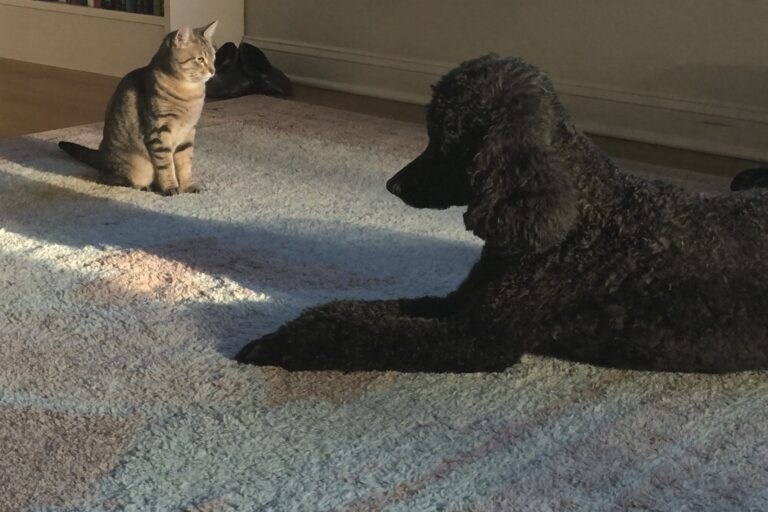
Black
The most common and the most genetically dominant. A true black Standard Poodle is a deep, even blue-black with black points — nose, lips, eye rims and pads. Blacks hold their color better than most, though some fade slightly with age or sun exposure.
White
A proper white is bright and clean rather than cream. Look at the points: white poodles should still have black pigment on the nose and eye rims. Weak or pink pigment is a fault and, more practically, means more sun sensitivity.
Cream
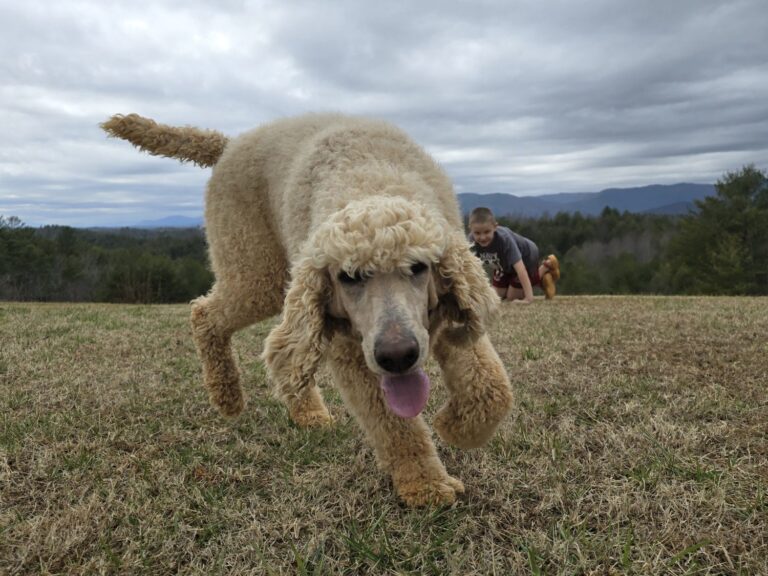
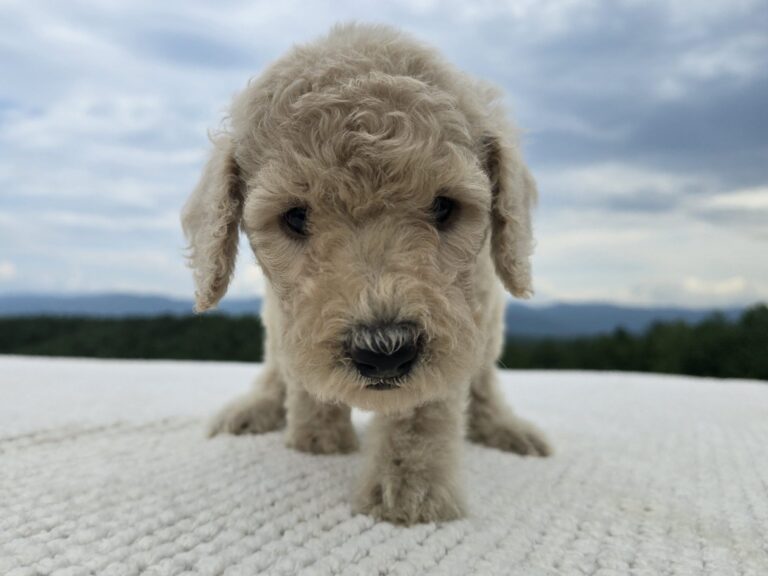
Between white and apricot — a soft, warm off-white. Many cream poodles are born darker and lighten as they mature, which surprises people.
Apricot
A warm, pale orange-gold. Apricot is one of the least stable colors in the breed: most apricot puppies fade over the first two years, sometimes considerably. The apricot puppy you collect at eight weeks will very likely be a lighter dog at two.
Red
A deep, rich mahogany, and much newer to the breed than the others. Reds also commonly fade, though good red lines hold color better. If a breeder guarantees an adult shade, be skeptical.
Silver
Here is the one that catches people out. Silver puppies are born black. The silvering gene (“progressive graying”) clears the coat gradually, usually starting around the face and paws at six to ten weeks and continuing until roughly two years old. A silver puppy that looks black at eight weeks is entirely normal — an experienced breeder can spot the clearing beginning at the muzzle.
Blue
Also born black, also clearing with age, but stopping well short of silver. A true blue is a dark, slightly hazy charcoal. Blue and silver come from the same mechanism, differing only in how far the clearing goes.
Brown and café au lait
Brown is a solid dark chocolate with liver points — brown nose and eye rims, never black. Café au lait is the faded version, a warm milky tan, and like silver it develops over the first couple of years.
The patterned colors
Phantom
Think of the Doberman pattern: a solid base color with defined tan or apricot markings in specific places — above the eyes, on the muzzle and cheeks, on the chest, down the legs, under the tail. The markings must be in those positions to be a true phantom. A black-and-tan dog with random tan patches is not a phantom.
Parti
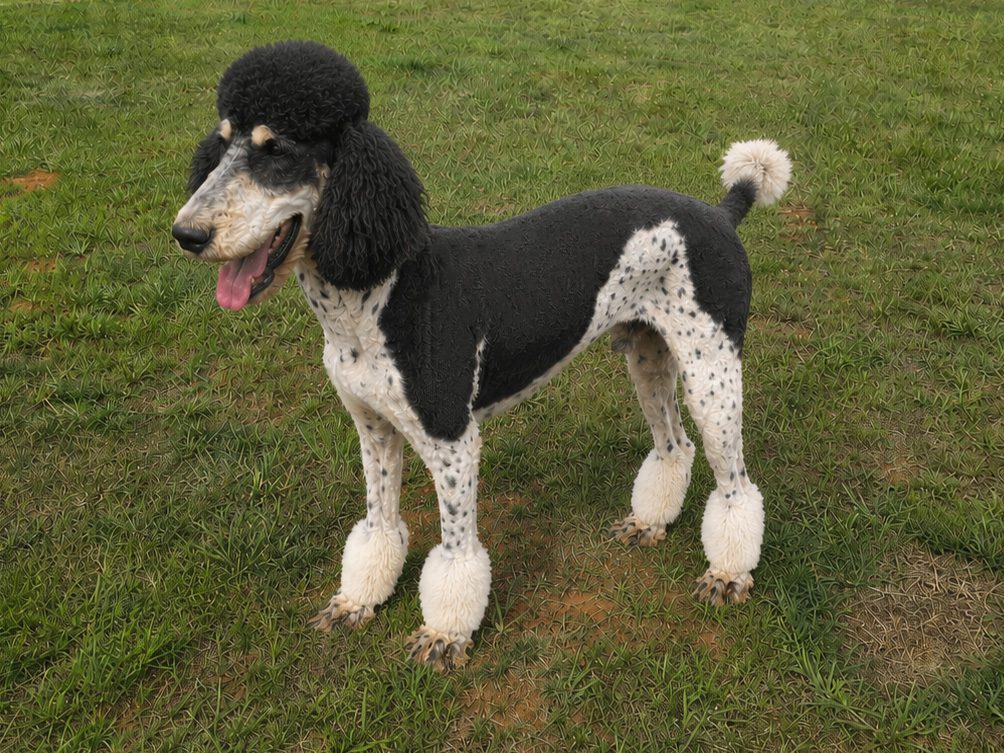
A predominantly white coat with solid patches of a second color, conventionally at least 50% white. Parti is an old, historically documented pattern in the breed, not a modern invention.
Tricolor
Essentially a parti with phantom markings — white base, solid patches, plus the tan points in the phantom positions. Less common simply because it requires several things to line up.
Sable, brindle and merle
Sable (dark-tipped hairs that clear as the dog matures) and brindle both occur in poodles. Merle does not occur naturally in Standard Poodles — it is not a poodle gene. A “merle poodle” carries that gene because another breed contributed it somewhere in the pedigree. That is worth knowing, and worth asking about, if a breeder is charging a premium for one.
About “rare” colors
Some colors genuinely are less common. That is not the same as being better, healthier or worth substantially more money.
Be wary of anyone charging a large premium for a “rare” color — it’s one of the red flags we cover in our guide to choosing an ethical breeder — and especially wary of the phrase “extremely rare” attached to a dog that is neither rare nor, in some cases, purebred. Color is decided by a handful of genes. Temperament, structure and health are decided by generations of careful selection, and those are what you will actually live with for the next twelve to fifteen years.
We price our puppies per litter, not per color. A red puppy and a black puppy from the same litter cost the same, because they are worth the same.
How color changes as your puppy grows
To summarize the thing that catches most new owners out:
- Silver and blue — born black, clear gradually to around two years
- Café au lait — born brown, clears similarly
- Apricot and red — usually fade, sometimes a lot
- Cream — often born darker, lightens
- Black — the most stable, though sun can lift it slightly
- Parti and phantom patterns — the pattern is fixed at birth; the shade within it can shift
The practical takeaway: if you have your heart absolutely set on an exact adult shade, a puppy is a gamble whatever anyone tells you.
What we would actually suggest
Tell us your color preference — genuinely, we note it and try to find it for you. But weigh temperament more heavily than color when the time comes to choose. The confident, pushy puppy and the thoughtful, watchful one will make very different companions for a family with a toddler or a retired couple in an apartment, and that difference will matter every single day. Selection is always your call — we’ll tell you what we’ve observed about each puppy, but the final choice among the available puppies is yours, not ours. The color will stop mattering in about two weeks.
Our own program regularly produces black, red, cream, brown (chocolate), abstract, phantom and parti puppies, with apricot possible from some pairings – our Standard Poodle colors page shows how each of ours looks and matures – and availability varies litter to litter — see current and upcoming litters for exactly what’s coming. Note your preference on your adoption application and we will tell you honestly what is coming.
Ready to Find Your Perfect Standard Poodle?
Family-raised in Morganton, NC. Health-tested parents, a five-year guarantee, and AKC registration on every puppy.