
We are in Morganton, in the Burke County foothills of North Carolina. A good number of our families are not.
Over the years puppies have gone to homes across the Southeast and well beyond, and the question of how a puppy physically gets from our house to yours comes up in nearly every first conversation with an out-of-state family. Here are the three options, honestly compared.
Option One: Drive and Collect in Person
This is what we recommend when it is at all practical, and it is what most of our families do.
You get to meet us, see where your puppy was raised, meet the parent dogs, and ask everything you meant to ask. Your puppy travels with the people he is going to live with rather than with strangers. And you can see for yourself that the operation matches the website – which, frankly, is something every puppy buyer should want to do wherever they are buying from.
Morganton sits on I-40 in the western North Carolina foothills – about 45 minutes east of Asheville and around 90 minutes from Charlotte – which makes it a straightforward drive from a large part of the Southeast. Families come from Charlotte, the Triad, upstate South Carolina, east Tennessee and southwest Virginia comfortably in a day. We have location pages with routes and details for Charlotte, Asheville, South Carolina, Tennessee, Virginia and Georgia.
Practical advice for the drive home:
- Bring two people if you can. One drives, one sits with the puppy. The first car journey of a puppy’s life goes considerably better with a person beside him.
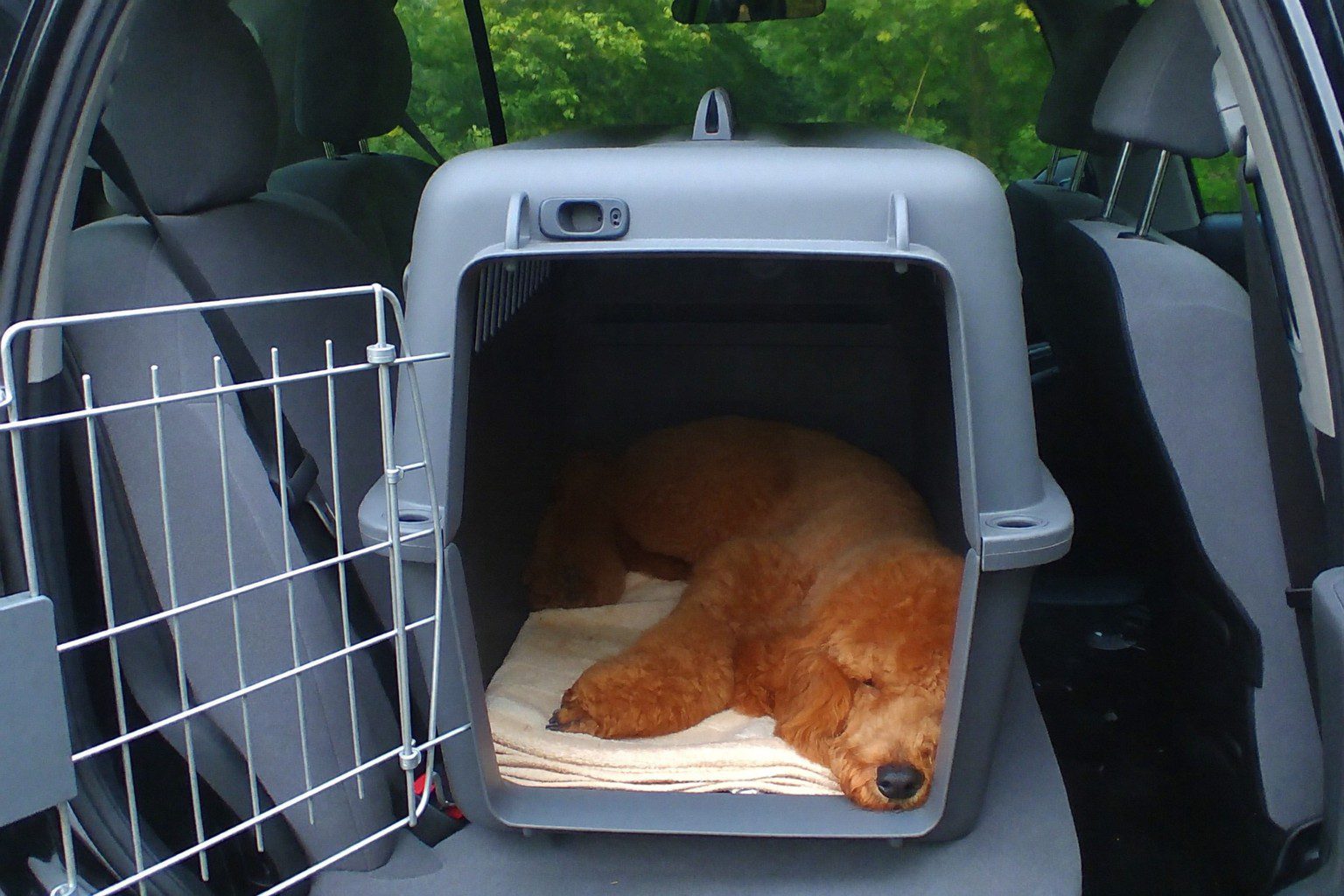
- Bring the crate and belt it in. Loose puppies in cars are dangerous to themselves and to you. If he cries, a hand through the crate door does more than letting him out.
- Towels, paper towels, cleaning wipes, a trash bag. Assume there will be at least one accident and possibly some car sickness. Puppies are very often sick on their first drive and it is not a sign of anything wrong.
- Stop every two hours for a potty break, on a leash, away from areas where lots of unknown dogs have been.
- Skip the meal right before departure. A puppy with a full stomach is a puppy who will be sick. Water yes, a full breakfast no.
Balance is due at pickup if you are collecting in person.
Option Two: Fly
For families further afield, air travel is the usual answer, and it works well.
The strong preference is in-cabin travel where possible. A young Standard Poodle puppy at eight weeks is often small enough to travel in an airline-approved carrier under the seat in front of you – though this depends on the individual puppy’s size and on the specific airline’s carrier dimensions, and a large male puppy may already be past the limit. Check the measurements against your airline before booking anything.
In-cabin means your puppy is with a person for the whole journey, in a climate-controlled space, which is a fundamentally different experience from traveling as cargo.
A few things worth knowing before you book:
- Airline policies vary and change. Several major carriers have restricted or ended live animal cargo programs in recent years. Verify current policy directly with the airline rather than relying on anything you read online, including this page.
- Book the pet space when you book your seat. Airlines cap the number of animals in the cabin per flight and it fills.
- Fly direct if you possibly can. Connections mean more handling, more noise and more chances for something to go wrong.
- You will need a health certificate – a Certificate of Veterinary Inspection – issued by a licensed vet, usually within ten days of travel. Requirements vary by airline and destination state.
- Watch the season. Airlines commonly embargo animal travel during temperature extremes, which in the Southeast means midsummer.
There is also the option of a flight nanny – a courier who flies with your puppy in-cabin as their own carry-on and hands him over at your arrival airport. It costs more than a ticket, and it means your puppy is accompanied the whole way by someone whose only job that day is your puppy. For families who cannot travel themselves, it is usually the best of the flying options.
All flight costs and any remaining balance on your puppy must be paid in full at least 48 hours before departure.
Option Three: Ground Transport
Professional ground transport services move dogs by road, usually on regional routes with several animals aboard.
One thing to be clear about, because families sometimes assume otherwise: ground delivery is arranged by you, not by us. You select and book the service, and you deal with them directly. We will have your puppy ready and hand him over, but the arrangement is between you and the transporter.
If you go this route, vet the company properly. It is a patchily regulated corner of the industry and quality varies enormously.
- Are they USDA registered as a transporter? Ask for the number.
- What is the vehicle like – climate controlled, individual crates, how many animals?
- How long is the route, and how often do they stop?
- What insurance do they carry?
- Can they provide references from breeders or families they have moved dogs for?
- Do they send updates and photos along the way? Good ones do without being asked.
Any remaining balance on your puppy must be paid in full at least 48 hours before he is collected.
Which Would We Choose?
If you can drive, drive. If the drive is genuinely too far, fly and bring your puppy home in the cabin yourself. If you cannot travel, a good flight nanny is the next best thing. Ground transport is a reasonable option and plenty of dogs travel that way perfectly happily, but it involves the longest time in transit with people your puppy does not know.
That ordering is about the puppy’s experience rather than cost. Every option on this list gets a healthy puppy to your door.
Before Travel Day
Whichever route you choose, have the house ready before you leave rather than after you get back. Our first-week checklist covers what to have in place, the crate training plan covers the first nights, and everything we recommend having on hand is on the recommended products page.
Book your first vet appointment before you travel. Our health guarantee requires an examination within 48 hours of your puppy going home, with the results emailed to us within five days, and appointments are easier to get when you are not booking them the same afternoon.
How the Rest of It Works
Distance does not change our process. Selection happens at around seven weeks in waitlist order, and can be done in person by appointment, by phone or over video chat – so families several states away choose their puppy on the same footing as families down the road. We send photo updates at two weeks, four and a half weeks and seven weeks, so you watch your puppy grow up whether or not you can visit.
Puppies go home at eight weeks. Full details are on our adoption process page, and the FAQs cover the specifics on deposits and waitlist position.
If you are out of state and weighing this up, call us before you decide. Every family’s situation is different and it is a ten-minute conversation. We are on 828-870-3989, or info@poodlesofpiedmont.com. When you are ready, the adoption application is the first step, and there is no obligation in sending one.
Ready to Find Your Perfect Standard Poodle?
Family-raised in Morganton, NC. Health-tested parents, a five-year guarantee, and AKC registration on every puppy.