If you’re considering a Standard Poodle, especially if you live close to neighbors or just value a peaceful home, it’s a fair question to ask before you commit. The short answer: Standard Poodles are not known as excessive barkers, but they’re alert, intelligent dogs who will let you know when something’s up. Here’s a realistic look at what to expect and how to raise a poodle who barks for the right reasons.
Standard Poodles Are Moderate Barkers
Compared to many breeds, Standard Poodles fall somewhere in the middle when it comes to barking. They’re not the constant, high-pitched alarm-sounders some smaller breeds can be, but they’re also not silent. A Standard Poodle will typically bark to alert you to a knock at the door, a stranger approaching, or something unusual in their environment, and then settle once they know you’ve got it handled. That alertness makes them good watchdogs without tipping over into nuisance territory.
Why a Poodle Might Bark More Than Usual
When a Standard Poodle barks excessively, there’s almost always a reason behind it, and understanding the cause is the key to solving it.
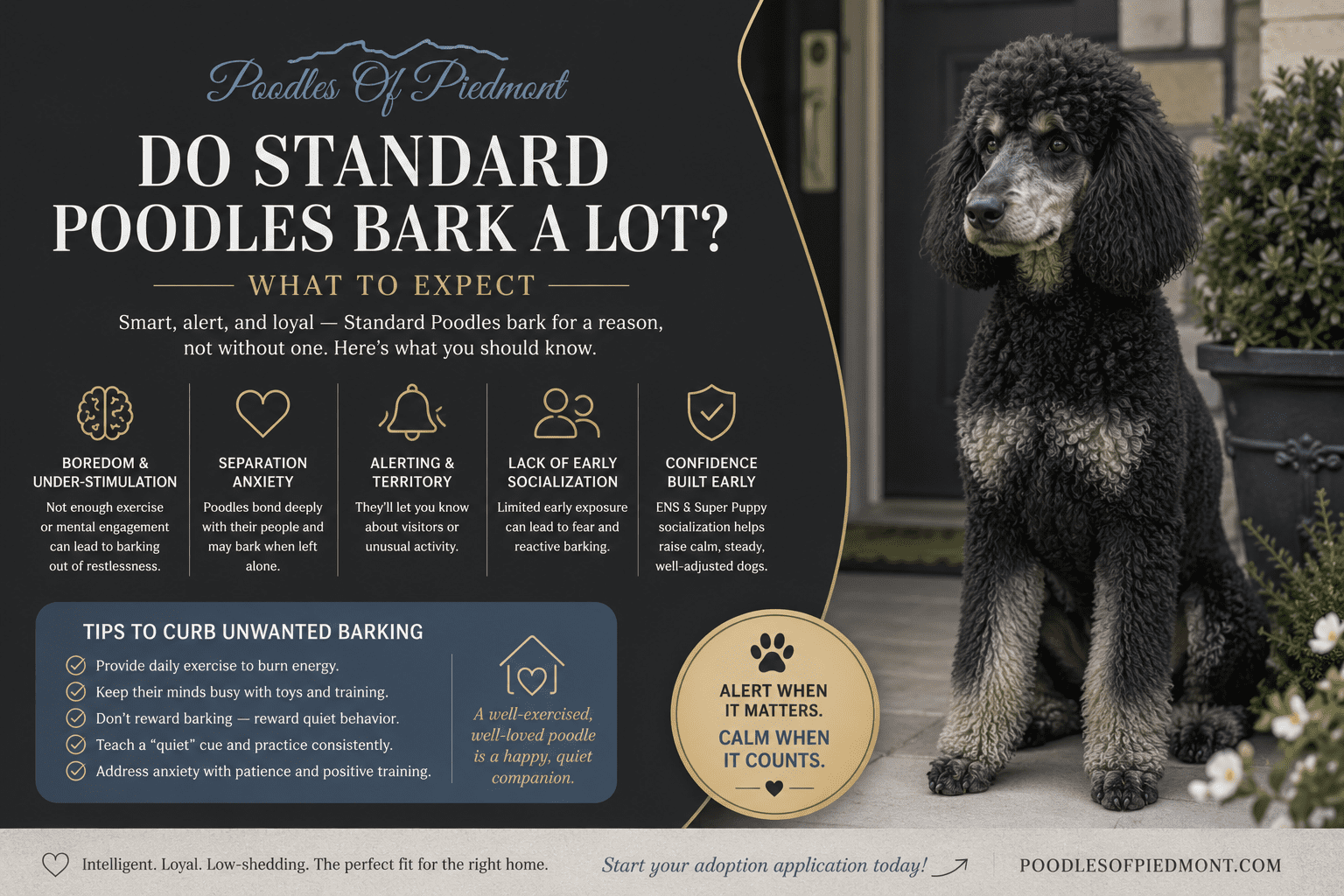
Boredom and under-stimulation. Standard Poodles are highly intelligent and need both physical exercise and mental engagement. A poodle who isn’t getting enough of either may bark out of sheer restlessness. This is one of the most common causes, and one of the easiest to fix.
Separation anxiety. Poodles bond deeply with their people and don’t love being left alone for long stretches. A poodle who barks when you leave may be telling you they’re anxious, not being disobedient.
Alerting and territory. Some barking is simply your poodle doing their self-appointed job of announcing visitors. A little of this is normal and even useful.
Lack of early socialization. A puppy who wasn’t exposed to a variety of people, sounds, and situations early on may grow up more reactive and prone to barking at the unfamiliar. This is exactly why those first weeks of life matter so much.
Socialization Sets the Tone Early
A confident, well-socialized poodle is far less likely to bark out of fear or uncertainty. Puppies exposed early to everyday sounds, gentle handling, and new experiences tend to grow into calm, settled adults who take the world in stride. We begin our ENS and Super Puppy socialization program in the first days of life precisely because that early foundation shapes a steadier temperament, including how a dog reacts to the things that might otherwise set off barking.
How to Curb Unwanted Barking
If your Standard Poodle is barking more than you’d like, a few approaches go a long way:
- Meet their exercise needs. A tired poodle is a quiet poodle. Daily walks, fetch, or a swim work wonders.
- Engage their mind. Puzzle toys, training sessions, and games keep that clever brain busy and out of trouble.
- Don’t reward the barking. Avoid giving attention (even negative attention) the moment they bark for it. Wait for quiet, then reward.
- Teach a “quiet” cue. Poodles are quick studies, and most pick up a calm “quiet” command faster than you’d expect.
- Address anxiety gently. If barking is rooted in being left alone, gradual practice and a comfortable space of their own can help. A crate they see as their own den is a great tool here.
Their intelligence is your biggest advantage. Standard Poodles respond beautifully to consistent, positive training, so unwanted barking is usually very manageable with a little patience.
A Calm Companion for the Right Home
For most families, a Standard Poodle strikes a nice balance: alert enough to be a good watchdog, but calm and trainable enough not to drive you (or the neighbors) up the wall. Give them exercise, mental stimulation, and early structure, and you’ll have a companion who speaks up when it matters and keeps the peace the rest of the time. If you’re still getting to know the breed, our family dog guide covers more of what makes them such great companions.
Start your adoption application here and let’s find the right Standard Poodle for your home.
Ready to Find Your Perfect Standard Poodle?
Family-raised in Morganton, NC. Health-tested parents, a five-year guarantee, and AKC registration on every puppy.